
It’s the sixteenth century, the height of the Renaissance, when several families of artisans, chimney sweeps, and trinket sellers from Val Vigezzo—now in Piedmont—gather up their tools and set out for Paris.
The life of an immigrant has never been easy, but Paris is the city of nobility, and some of these migrants find work around royal palaces and among the city’s elite.
Time passes, and one day, one of the young chimney sweeps working at the Louvre slips into the wrong flue and, quite unintentionally, overhears a most private conversation: a plot against Louis XIII, the young son of Queen Maria de’ Medici.
The chimney sweep does everything he can to secure an audience with the queen and reveal what he has heard, and in the end, he succeeds. Not only that—it turns out he was right!
Grateful, Maria de’ Medici makes a decision which, in its own way, will touch even the life of Paolorossi centuries later: she grants these migrant families the right to freely trade their goods and practice their professions throughout France, forever.
Among the families benefiting from this privilege are the Mellerios.
More water flows under the bridges of the Seine, and in the eighteenth century, one of the Mellerios—his name is Jean-Baptiste—ends up selling jewelry near the entrance to Versailles. The royals pass by frequently, and Jean-Baptiste’s jewels catch the eye of none other than Marie Antoinette. However it happened—whether through charm or skill—over time, the Mellerios became official suppliers to the crown and its entire entourage, eventually serving the Bonapartes as well, and their creations found their way into the treasuries and jewel boxes of nearly all of Europe’s nobility, as well as distinguished figures in culture and diplomacy. For centuries.
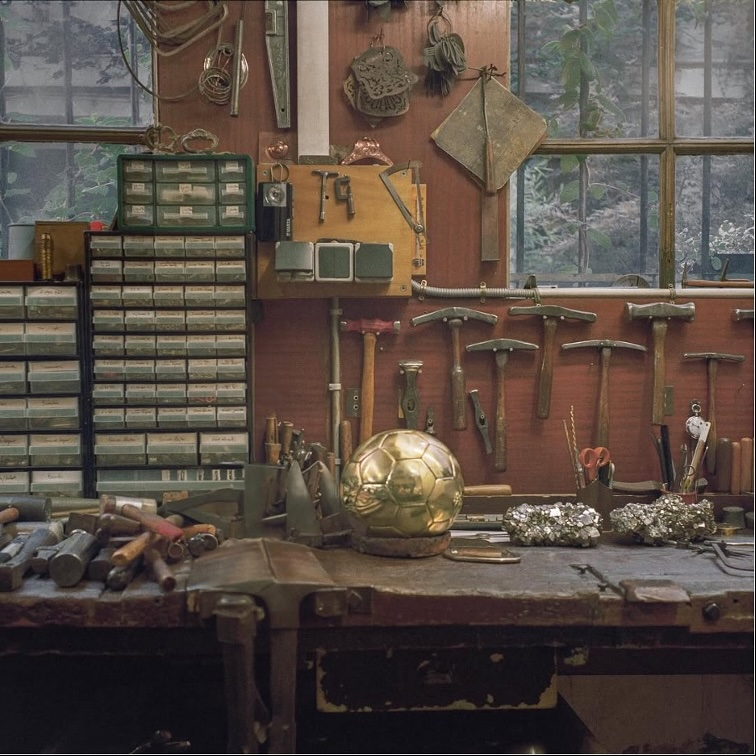
The Mellerio family’s goldsmithing artistry was already widely recognized when, in 1956—the year Pablito was born—the prestigious Ballon d’Or, the Golden Ball award, was established. From that moment on, it has been the Mellerio Maison that crafts the trophy, strictly by hand, drawing on the centuries of high jewelry expertise that are their lifeblood.
Today, the trophy is larger than it once was, but the process by which it is made has remained unchanged: 100 hours of work spread over the six months leading up to the ceremony.
Two brass hemispheres are welded together, but the goldsmith is careful to create a small hole that will allow the ball to be fixed to its base, which nowadays is made of pyrite crystal. Once the two hemispheres are joined, the ball passes into the hands of the engraver, who first fills it with cement powder and then begins the painstaking work of recreating the leather stitching. The gold plating is only one of the final stages: the last step is engraving the winner’s name, which, once decided, is inscribed on a golden plaque to be affixed to the trophy’s base.
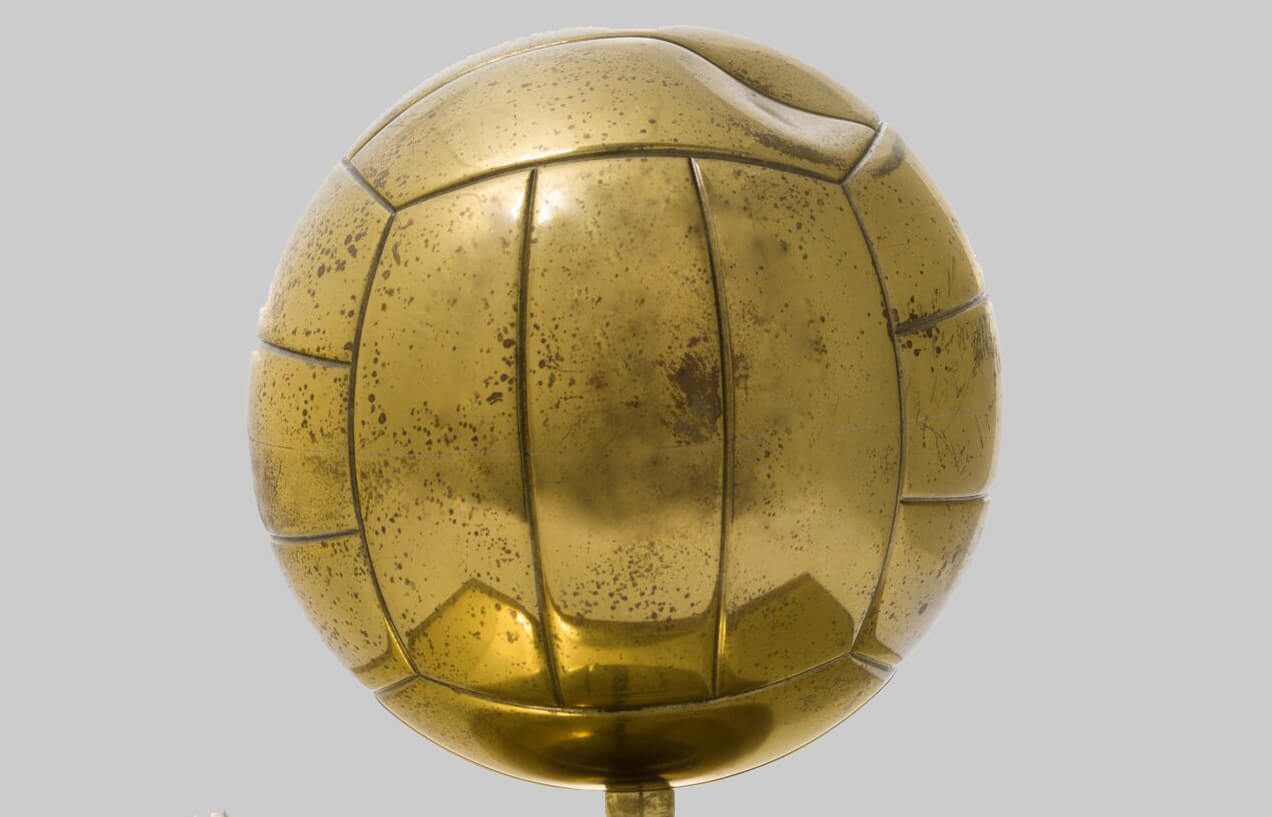
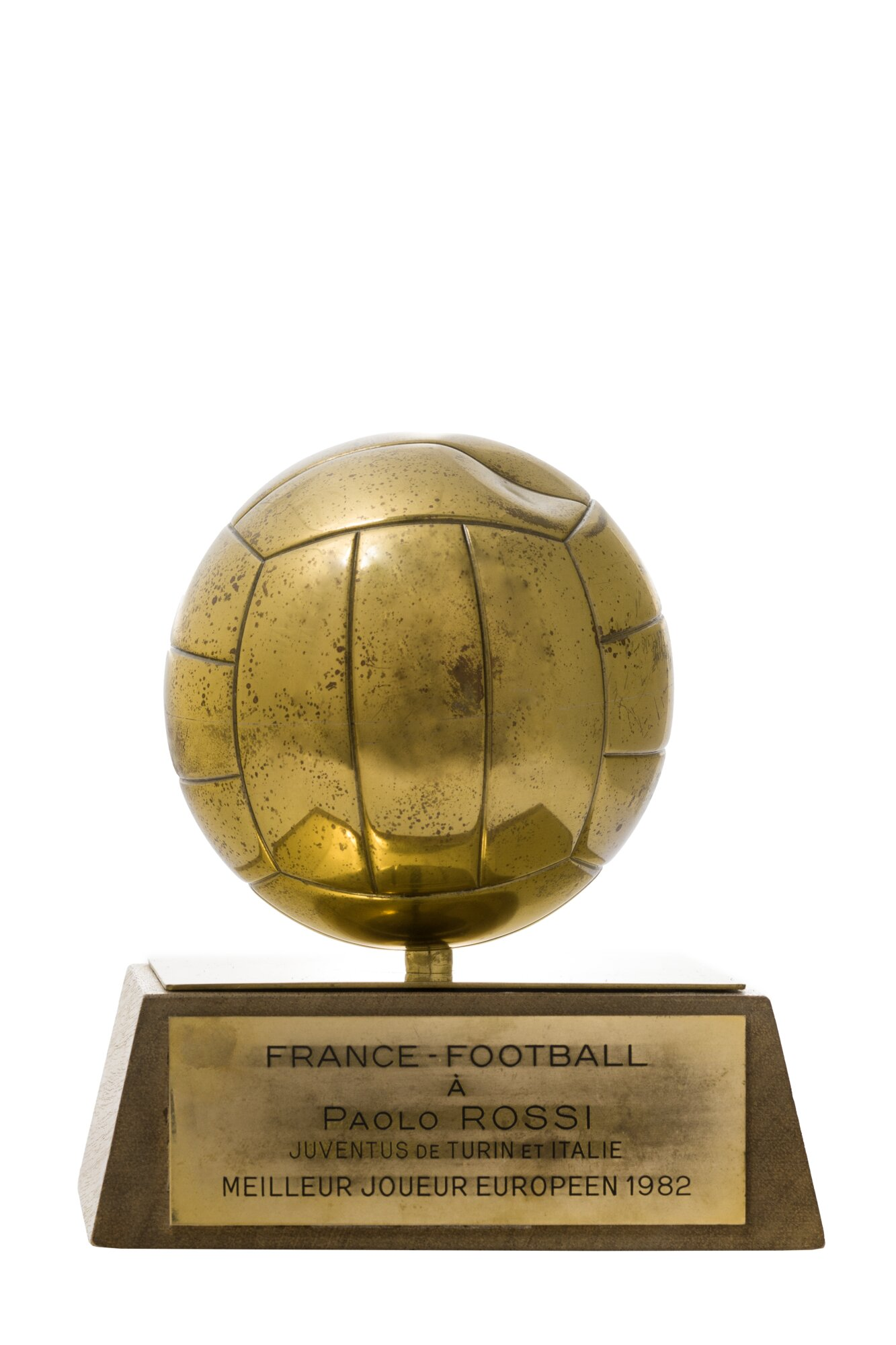
In 1982, the name to be engraved was Paolo Rossi, who, with the uniqueness that always set him apart and with his usual impeccable timing, managed to personalize an already rare trophy even further. One day, in Vicenza, the Ballon d’Or slipped from his hands. We like to imagine it bounced, and that Pablito juggled it a little—King Midas of football, able to turn so many balls to gold, this time quite literally. What remains is an imperfect but unique golden ball, bearing the mark of his mythic play—a tangible testament to Pablito’s passage on this planet of football fans.