

Not just the Orange!
The colors of national teams aren’t chosen at random, as we know. They’re flags stitched into the skin, fragments of history that become legend every time an anthem echoes through a stadium. The Orange, of course: the Netherlands shines with the royal orange of the House of Orange-Nassau, and the stands turn into a monochrome carnival every time they take the field. But if you stop there, only looking north, you’ll miss the real spectacle. Because all it takes is heading a bit further south, past the gray rooftops and bicycles of Amsterdam, to find another color that can set your heart alight: blue.
Italy’s blue. The real one, the one whose roots reach back to a time when dynasties spoke Latin and flags had a soul. The color of the House of Savoy, yes, but also—and perhaps above all—the color of the Virgin Mary’s mantle, to whom the dynasty was deeply devoted. In short, serious stuff, a blend of faith, history, and identity. It’s not just a color: it’s a calling.
For that blue jersey, every Italian hopes, suffers, rejoices. Every athlete desires it the way you long for an impossible love: you train, you fight, you fall, you pray. It’s a secular vow to a sporting deity. And at a certain point in its history, even though the tricolor shines on the outside, inside, right there on the inner label, there’s a curious detail: a little rooster. That’s right, Le Coq Sportif.
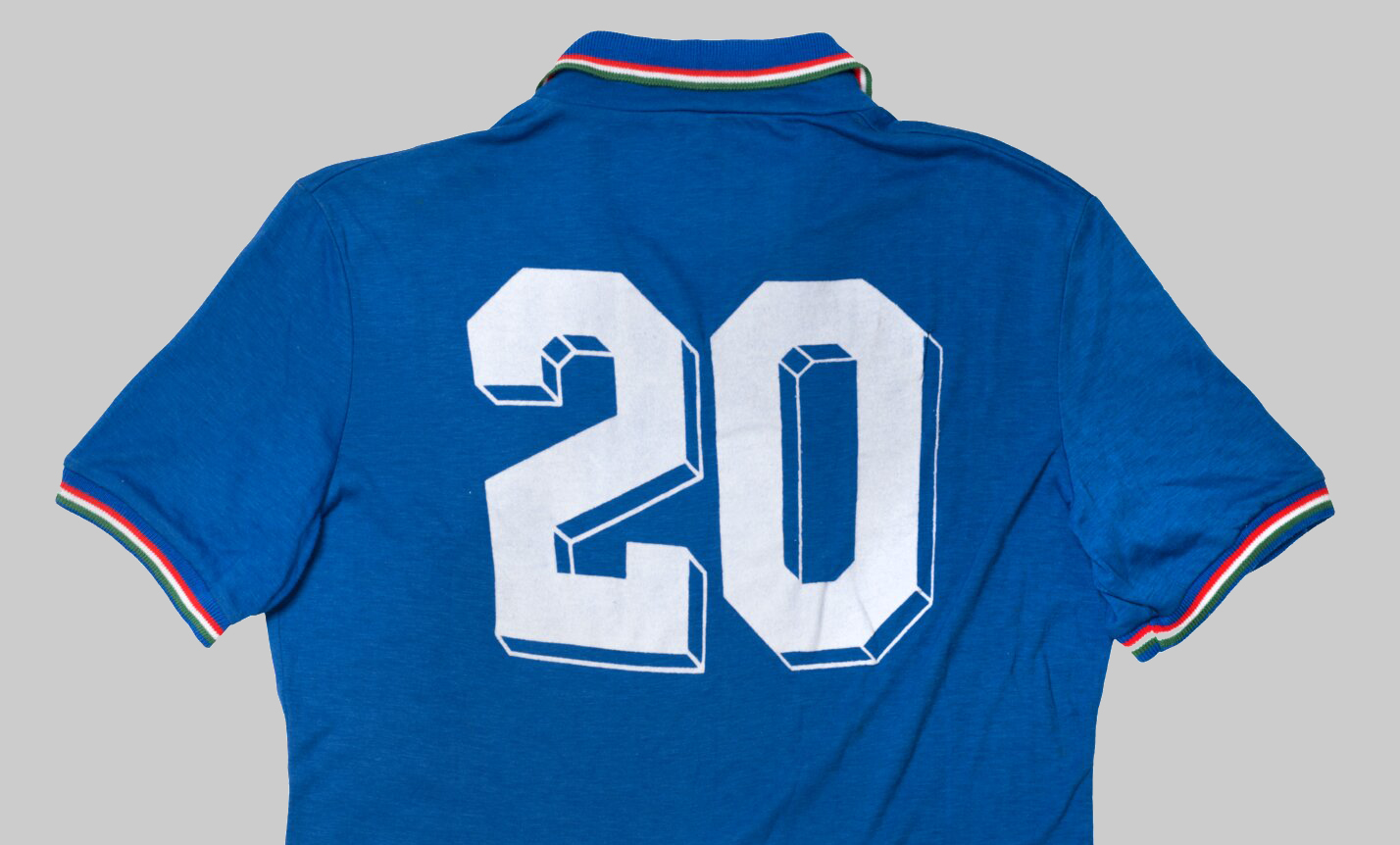
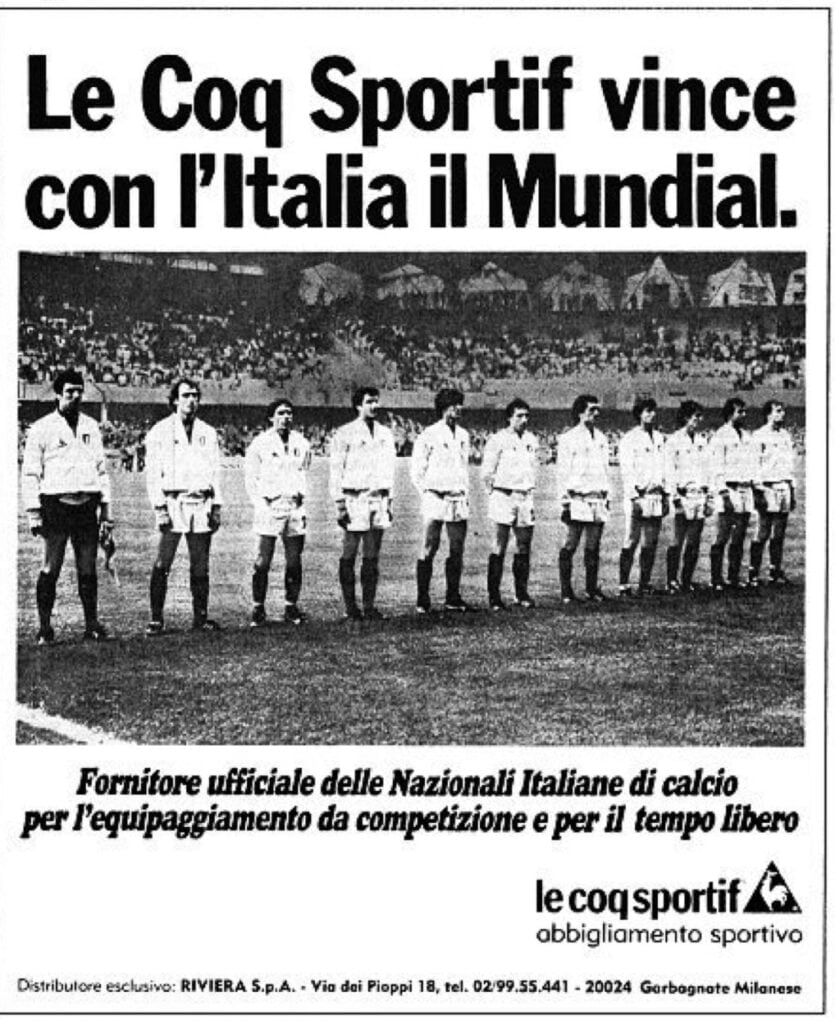
Irony of fate, or perhaps just a splendid paradox of destiny: the symbol of France stitching the deeds of Italy’s finest. In 1979, the French brand took over from Adidas as technical sponsor and sewed the blue onto the heroes who would write one of the most unforgettable chapters in world football.
In the workshop at Roilly-sur-Seine, in the heart of the Aube region, Émile Camuset—who didn’t make bubbles, but rather jersey shirts for athletes—started it all in 1882. Exactly a century before that magical night in Madrid. Coincidence? Maybe. But a hundred years later, in that same 1982, Le Coq dressed the Azzurri. And they didn’t just dress them: they made them shine.
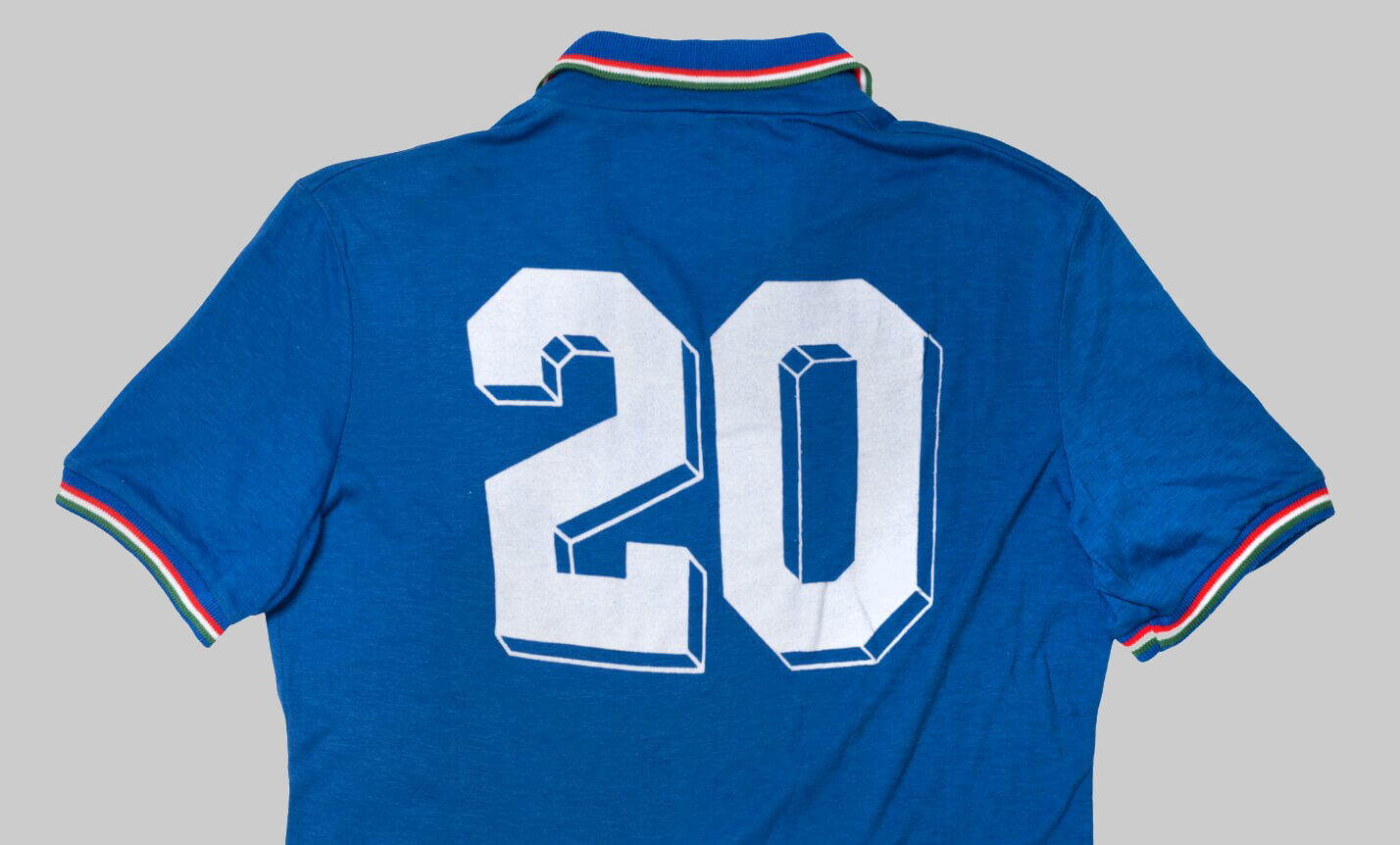
Forget the anonymous jerseys: this is where the legend was born. A shirt half cotton, half polyester, light as a child’s dream and strong as the cry of a nation. The collar changed, becoming a polo—elegant, almost regal—and the first tricolor details appeared on sleeves and collar, a mark of identity that would last until Italia ’90. The crest was updated too, with the FIGC initials set in white, as if to say: the soul of our football is right here.
That’s the shirt of Paolo Rossi, of Tardelli’s scream, of Altobelli’s wild run. The shirt soaked in sweat and glory, as Italy lifted the World Cup and an entire generation felt invincible.
And right there, on the damp grass of the Bernabeu, there was Rossi lying on the ground, eyes to the sky, drunk not only with happiness but also—as he himself would say—by a shower of champagne. In a sense, the circle closed: from a jersey stitched in the land of bubbles, to a triumph bathed in them.
So yes, not just the Orange. Because there are colors that tell much more than the story of a team: they tell who we are. And for Italy, blue is exactly that. An act of love, a promise to the heavens. And a shirt that, even today, can still give us goosebumps. Woven from threads of polyester and cotton.
THE PRINCE IN BLUE, THE BLUE JERSEY, AND THAT CHILDHOOD PROMISE
There’s a dream that belongs to everyone—truly everyone. It makes no distinction between those playing on the cracked asphalt of the courtyard below their house and those treading the perfect grass of international stadiums. It’s a dream that sparks in childhood, in front of the television, beside a grandfather or a father, with skinned knees, an oversized jersey, and the tricolor flag clutched in your hands: playing for Italy. Wearing blue. Winning the World Cup.
It’s our "once upon a time,"the fairy tale no one gives up on. Only, instead of a white horse, here you run on two legs, and the prince in blue wears shin guards, cleats, and the anthem in his ears. The World Cup? That’s the princess to be won. And the national team jersey is the magical armor that makes you invincible—or at least, that’s what we’ve always believed.
When we talk about the national team, we’re really talking about something more. About the Cup, the real one. Because we all know our hearts beat faster when the World Cup is at stake. Because it’s there, under that sky filled with flags, that all of Italy stops for a moment dividing itself between Juve, Inter, Milan, or any other allegiance, and remembers that, deep down, we are one people. United. For ninety minutes (plus stoppage time). And if we win, we all win.
“When you wear that shirt, you’re ready to die to honor it.”
Heavy words, engraved in the hearts of those who truly know the pitch. Because the national team isn’t just a call-up. It’s a passing of the torch between generations, it’s feeling part of a long, glorious, and sometimes painful story. It’s the peak of a promise made as a child, with sticky hands from gelato and eyes full of Pelé.
Like Paolo Rossi, when in 1970 he watched Italy-Brazil with his grandfather Giovanni. Sitting in the living room, the armchairs always in the same place, as if the love for the blue jersey had its own sacred ritual. And when Italy lost that final, Paolo didn’t forget. He didn’t forget the tears. He didn’t forget the promise. “Brazil will pay for this insult,” he said. “I’ll do it for you, Grandpa.”
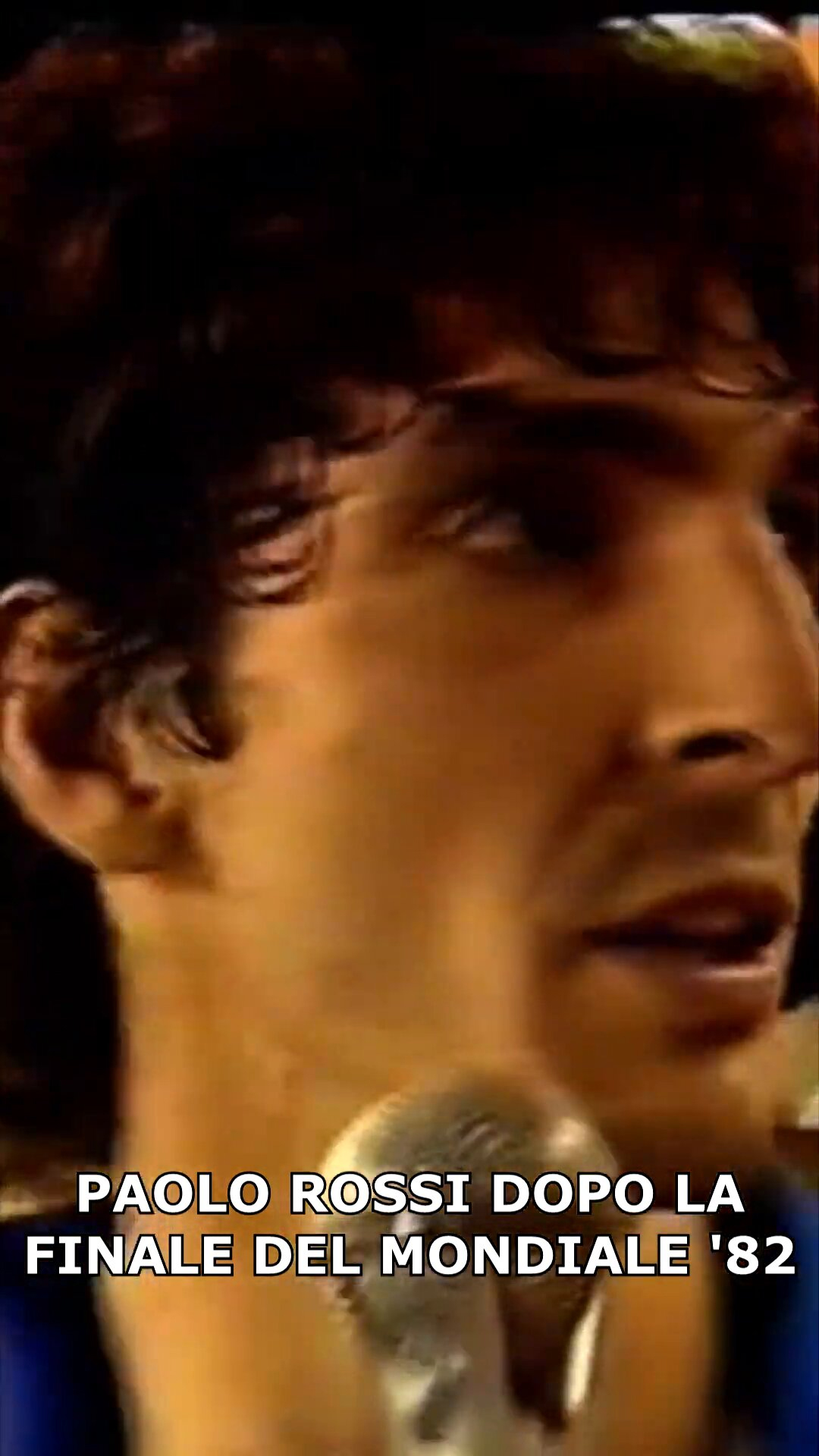
That scene is a gem set in the history of our football. Tender as a grandfather’s embrace, epic as a kiss on the forehead. And humble—just like that interview Giampiero Galeazzi did with Paolo Rossi after the triumph of ’82. No heroic lines. No star poses. Just two men, tired and happy, with eyes full of immense gratitude. Galeazzi, his voice trembling more than the microphone, and Rossi, who still seemed like that little boy in shorts. The prince in blue, finally astride his dream.
So yes, let’s talk about the World Cup. Because every time the anthem plays and the tricolor waves, we all become children again. We see our grandparents, our living rooms, our secret promises. And maybe not all of us will get to lift that Cup, but we can all live the magic of chasing it.
Because blue isn’t just a color. It’s a state of mind. It’s an ancient pact that passes through a child’s tears, a grandfather’s embrace, and the words of a hero who managed to be great with the same humility he started with.
And if that’s not a fairy tale, then maybe we’ve forgotten what one truly is.