PERUGIA SPONSOR PHOTO
IMAGES
The untimely death of Paolo Rossi is a loss that has touched the whole of football in Italy closely: the hero of the Spanish World Cup won by the Azzurri in 1982, who then became then a pundit and television face in the last years of his career, had toured many Italian clubs in the the late 1980s, bringing back memories everywhere. magnificent. While the most celebrated are certainly the seasons spent with Vicenza and Juventus, if for no other reason for the European successes and the conquest of a historic Ballon d'Or, his brief move to Perugia (interrupted by disqualification for the football betting affair in 1980) has however left its mark in a definitive way. Rossi, even before becoming Pablito, contributed in an indirect way to writing the history of Italian football with the birth of the first sponsorships on game shirts.
At the end of the 1970s Perugia was certainly one of one of the most prestigious clubs in Italy, had a brand new stadium brand new stadium and had built a strong and ambitious club thanks to the qualities of the Apulian manager Franco D'Attoma. Despite the shock of Renato Curi, it managed to finish the 1978/1979 A season as undefeated, earning the title of "Perugia of miracles". This team needs a few adjustments to confirm itself among the league's greats, and it is precisely then the former president decides to bet on the on the most talked-about striker of the moment, veteran from the World Cup in Argentina '78, Paolo Rossi. But to convincing Vicenza to let him go required a not not inconsiderable economic effort (500 million per annum for the loan) and so D'Attoma came up with an idea that would idea that would revolutionise Vicenza forever. Italian football.
"Nobody wanted to believe this deal.... buy Rossi with other people's money. We found a a couple of companies that will sponsor the whole deal. the whole deal, we won't lose a penny, in fact we will on top of it considering the foreseeable increases in both revenues and season tickets." Franco D'Attoma in La Stampa, 14 July 1979.
The idea of sports sponsorship was developing just about everywhere, actually. In Braunschweig for example, the local Eintracht team had decided as early as 1972 to place the coat of arms of the coat of arms of the well-known German liquor company liquor company, Jägermeister, on their shirts, obtaining 100,000 marks for advertise it. But also in Italy something similar was being something similar after the birth of the partnership between the Lanerossi and Vicenza, dating as far back as 1953, for which the Venetian club began carrying the coat of arms of the wool mill on its chest. In fact, even Udinese, which on the initiative of president Teofilo Sanson decided to have the company's logo printed by ice-cream company he owned on the shorts.
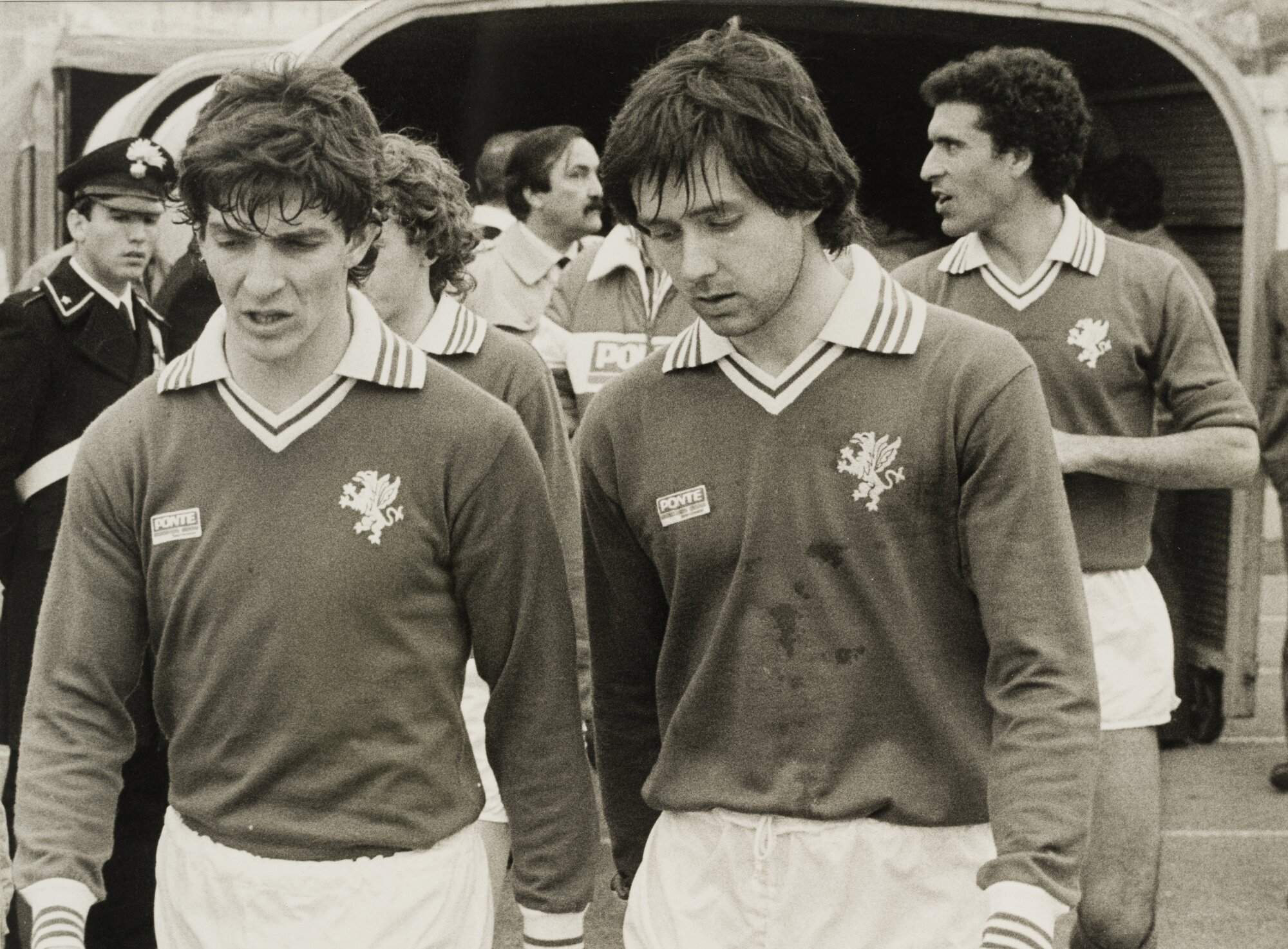
To obtain the money to close the Rossi deal, D'Attoma studied a different plan, agreeing with the food group IBP (Buitoni-Perugina) to use the the Ponte pasta factory logo on the uniforms in in exchange for 400 million. Everything happened for the first time on the occasion of the Coppa Italia match between Perugia and Roma, on 26 August 1979, although on that occasion the only one not wearing the Pasta Ponte branded shirt was Rossi himself, who already had a personal agreement with another food company, Polenghi Lombardo.
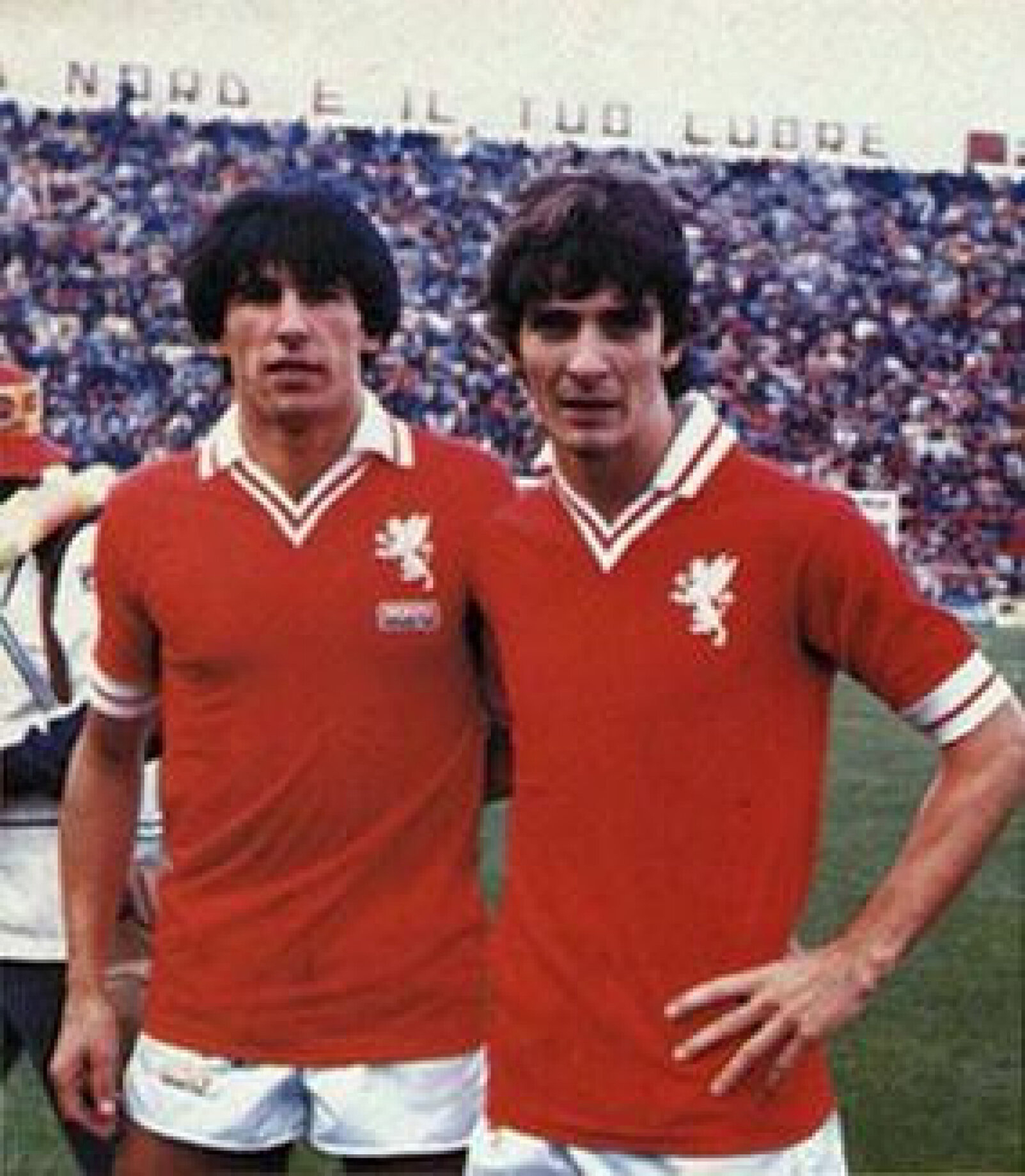
The debut of jerseys sponsored by a commercial commercial activity, although illegal (expressly prohibited by Article 16 of the federal regulation, which provided in fact, the possibility of placing on the jerseys for a maximum of 12 square centimetres, only the name of the only the name of the technical sponsor) marked in any case a resounding turning point in the history of marketing applied to sport. Given the ban and the resulting fine of 20 million, D'Attoma only had to concerned himself with getting around the rule with a contrivance, creating a fictitious sports line that he called 'Ponte Sportwear', thus making it possible to display the brand on the players' shirts, right under the symbol of the Grifone.
D'Attoma had indeed perfectly understood the scope future of this intuition and went ahead with his project of brand valorisation and exploitation exploitation of the image for economic purposes, putting the name of the sponsor on other sports products such as tracksuits and other and other game clothing of the Biancorossi and even on the nets and on the grass of the stadium, which in the meantime had become the 'Renato Curi'. A few months later, the Lega National Professional League authorised Perugia to take to the pitch on the pitch with the advertising logo on the shirts, effectively giving the go-ahead not only to the Umbrian team (which therefore made a second debut, this time regular, on 23 March 1980), but to all other other Italian teams through a regulation officially issued in 1981 by the FIGC.